The model that isn't allowed out
The strangest story of the week isn't happening in benchmarks or keynote slides. It's playing out in the legal gray zone between Washington and San Francisco. Anthropic still cannot distribute Claude Mythos 5 or Fable 5 after running afoul of the Trump administration's export controls — and as Wired reports, no one can articulate exactly what the company did wrong. The trigger was reportedly a jailbreak that security researchers describe as a routine code-review prompt. From that, the administration concluded the models posed a proliferation risk and applied restrictions normally reserved for semiconductors and enriched uranium.
Ben Thompson at Stratechery goes further: the administration is almost certainly wrong on the technical merits, but that doesn't let Anthropic off the hook. The company has staked its entire public identity on being the grown-up in the room — and is now discovering that being the grown-up means also knowing how to explain to a regulator why every prompt that bypasses a safety filter is not, in fact, a national-security incident. Mythos and Fable sit in legal limbo while competitors ship one frontier model after another.
Gemini 3.5 and the quiet pivot to action
The regulatory drama hasn't slowed anyone else down. Google DeepMind this week shipped Gemini 3.5, a family of models explicitly built for agentic workflows — not chat, but the execution of multi-step tasks in real systems. The shift in framing matters more than the benchmark numbers. A year ago, frontier models were sold on reasoning. Today they're sold on doing. Alongside it, DeepMind published a cognitive framework for measuring progress toward AGI and launched a Kaggle hackathon for the evaluations that follow from it. It's the first serious attempt by a major lab to give the word AGI operational content — and also a diplomatic move: if you write the definition, you also define the moment it has been crossed.
The same week brought DeepMind's $10M funding call for multi-agent safety research. The timing isn't coincidental. If Gemini 3.5 and its peers begin to actually act — calling APIs, moving money, coordinating with other agents — then the safety problem stops looking like content moderation and starts looking like game theory. The fund is small relative to what Google spends on compute, but it's the first public signal that the lab treats multi-agent dynamics as its own risk category.
Geopolitics and the S-1
Meanwhile, OpenAI confirmed a confidential S-1 submission to the SEC with no firm timeline. It is the formal start of the public-markets path for a company whose governance structure was, two years ago, described as inscrutable. If there was ever a moment when the AI sector finalized itself as a normal capital market, this is it. And running directly against that current is Bernie Sanders' $7 trillion proposal for an AI wealth fund that would give Americans equity in the largest model labs in exchange for sharing the gains from automation. Its chance of passing is zero. Its significance as an Overton-window move is not: for the first time, a sitting senator has formally argued that AI profits are concentrated enough to require a sovereign-fund response.
Place those three stories side by side — Anthropic blocked by export control, OpenAI heading for the public markets, Sanders calling for nationalized equity — and US policy toward AI stops looking like a single doctrine. The White House uses export controls improvisationally, the SEC processes an IPO filing, the Senate left flank floats expropriation. That isn't a regime. It's three regimes at once.
Second-order: where the talent goes
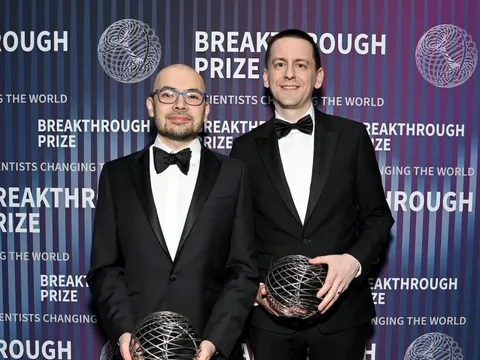
And then there's the detail it would be easy to miss. John Jumper, the Nobel laureate behind AlphaFold, is leaving DeepMind for Anthropic. Jumper isn't the only big name leaving Google DeepMind in recent months. There's an irony in the timing: in the same week the administration has its foot on Anthropic's neck, the company picks up one of the most prestigious scientific names in the field. The talent market is voting differently than the regulator.
A second-order effect worth dwelling on: if export controls become the instrument by which the administration punishes specific labs for specific safety incidents, the incentive structure that emerges is perverse. Labs that talk publicly about safety are easier targets — they have documentation, red-team reports, things to quote against them. Labs that say nothing are invisible. If Washington genuinely wants to raise the safety floor on frontier models, that is exactly the wrong incentive. And Anthropic is the live proof of what happens when the grown-up in the room discovers the room is not playing by the rules it set for itself.